Understanding Air Compressor Pressure, Capacity and Power
Compressed air is used across workshops, garages, construction environments, manufacturing facilities and hobby spaces. Yet choosing the right equipment involves more than looking at the size of the motor or the tank. Understanding pressure, capacity and power makes it much easier to determine whether a machine is suitable for a particular tool or task.
The three specifications are closely connected, but they describe different aspects of performance. Pressure indicates how forcefully compressed air can be delivered, capacity describes how much air the machine can supply or store, and power refers to the energy required to operate the compressor. Looking at these figures together provides a clearer picture of what a machine can realistically handle.
For anyone comparing air compressors, these specifications can initially seem confusing. A larger motor does not automatically mean a compressor is better for every application, while a large storage tank does not necessarily mean the machine can continuously supply enough air. Understanding what each measurement means can help buyers avoid selecting equipment that is either unnecessarily powerful or unable to meet their actual requirements.
What Does Air Compressor Pressure Mean?
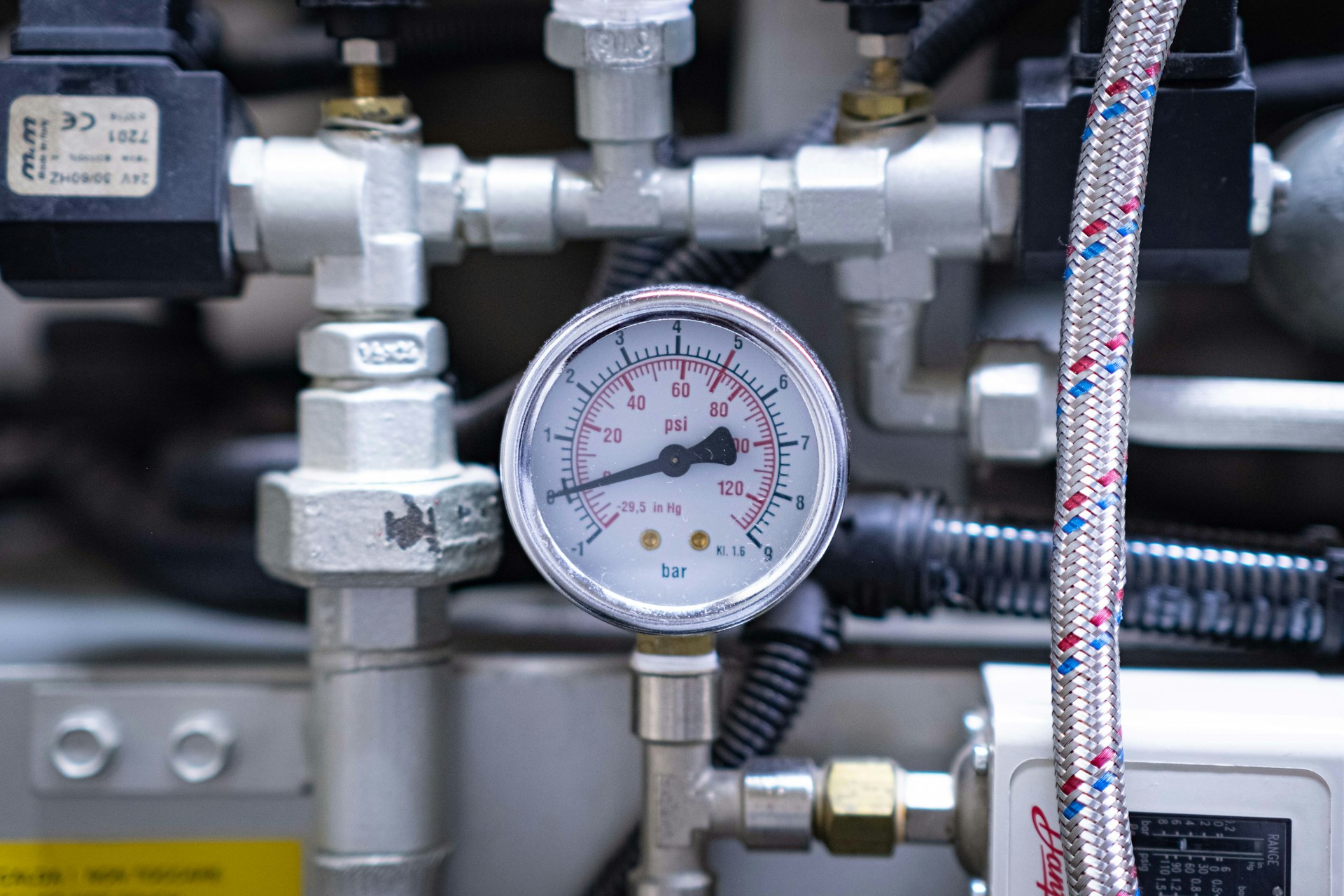
Pressure describes the force at which compressed air is delivered. It is commonly measured in bar or pounds per square inch, abbreviated as PSI. The pressure rating tells you how much force the compressed air can exert when it leaves the system.
Different pneumatic tools require different operating pressures. A small airbrush may need considerably less pressure than an impact wrench, while some workshop equipment requires a relatively high operating pressure to function correctly.
Maximum pressure and working pressure should not be confused. Maximum pressure is the highest pressure the compressor is designed to reach under normal operating conditions. Working pressure is the pressure available for the connected application.
A compressor might therefore have a maximum pressure of 10 bar, while a particular tool may only require around 6 or 7 bar. That does not mean the tool should automatically be operated at the maximum setting. The manufacturer’s recommended operating pressure should always be followed.
Using excessive pressure can affect tool performance, increase wear and create unnecessary safety risks. Pressure should be regulated to suit the equipment being operated.
Understanding Air Capacity
Capacity is another important specification, but the word can refer to more than one measurement. Compressor manufacturers may describe tank capacity in litres, while air delivery is often given as litres per minute or cubic feet per minute.
Tank capacity refers to the amount of compressed air that can be stored in the receiver tank. A larger tank provides a greater reserve of compressed air before the motor needs to run again.
Air delivery, on the other hand, describes how much compressed air the compressor can produce over a given period. This figure is particularly important when operating pneumatic tools continuously.
For example, a tool might consume 250 litres of air per minute. A compressor with a small tank may initially operate that tool successfully because stored air is available. However, if the compressor cannot replenish air at a sufficient rate, pressure will eventually fall.
This is why tank size alone should not determine a purchasing decision.
Tank Size Versus Air Delivery
A large receiver tank can be useful for applications that require short bursts of compressed air. It provides a reserve that can temporarily supplement the compressor’s output.
This can be particularly helpful for intermittent tasks such as using a nail gun, blowing off equipment or inflating tyres. The compressor may not need to operate continuously because the tank supplies some of the required air.
Continuous applications are different. Spray painting, certain pneumatic sanders and some production equipment can consume air for extended periods. In these situations, the compressor’s air delivery becomes much more important.
When comparing specifications, pay close attention to the stated air delivery at a specified pressure. Free air delivery, often abbreviated as FAD, can provide a more useful indication of practical compressor performance than theoretical displacement figures alone.
What Does Compressor Power Tell You?
Power describes the energy used by the compressor’s motor. It may be expressed in kilowatts or horsepower.
A higher-powered motor can generally drive a larger compression system, but power should not be viewed in isolation. Two compressors with motors of similar power can have different pressure ratings, air delivery figures and efficiencies.
Motor power also affects electrical requirements. A more powerful compressor may require a different electrical supply, particularly in commercial or industrial environments. Before installation, the electrical requirements should be checked carefully and compared with the available supply.
For larger fixed installations, electrical work may need to be carried out by a suitably qualified professional. Electrical connections, protection devices and installation requirements should never be improvised.
How Pressure, Capacity and Power Work Together
The most useful way to understand compressor specifications is to consider them as parts of one system.
Power helps drive the compression process. The compression system produces air at a particular rate, while the receiver stores compressed air for later use. Pressure determines the force at which that air can be supplied.
Increasing one specification does not necessarily compensate for a weakness in another.
A large tank cannot make up indefinitely for insufficient air production. Similarly, a powerful motor does not guarantee adequate air delivery at the pressure required by a particular tool.
When assessing a compressor, consider:
- The operating pressure required by the equipment
- The air consumption of the connected tool
- The compressor’s delivered air volume
- The receiver tank size
- The motor’s power rating
- The expected frequency and duration of use
This approach gives a much more accurate picture of suitability than simply choosing the biggest machine available.
Choosing a Compressor for Pneumatic Tools
Pneumatic tools can have very different air requirements. A nail gun used intermittently may consume relatively little air over an entire working period, while an impact wrench used repeatedly can place a much greater demand on the compressor.
Always check the manufacturer’s specifications for the tool. Look for both the recommended operating pressure and air consumption.
It is also useful to consider how the tool will actually be used. A tool rated at a certain air consumption may behave differently depending on whether it is used for a few seconds at a time or continuously.
For occasional workshop use, a modest compressor may be sufficient. Professional environments where multiple tools are used throughout the day generally require more careful capacity planning.
A compressor should ideally have enough air delivery to meet the tool’s requirements without constantly operating at its limit. Allowing some operating margin can help accommodate variations in demand and reduce the likelihood of frequent pressure drops.
Why Duty Cycle Matters
Duty cycle describes how much of a given period a compressor can operate before needing a cooling or rest period. This specification is particularly relevant for smaller machines.
A compressor designed for intermittent use should not necessarily be treated as a continuous-duty machine. Running equipment beyond its intended duty cycle can contribute to overheating, premature wear and reduced service life.
Before purchasing, consider how frequently the compressor will be running.
Short tasks with plenty of downtime place a different demand on the machine than repeated pneumatic operations throughout an entire shift. Commercial users should pay particular attention to manufacturer guidance concerning duty cycle and continuous operation.
Pressure Regulation and Safe Operation
Having a compressor capable of producing high pressure does not mean every connected tool should receive that pressure.
A regulator can be used to adjust the outlet pressure to an appropriate level for the application. This helps ensure that pneumatic equipment receives air within its specified operating range.
Air systems should also be inspected regularly. Hoses, fittings, connectors and tanks should be kept in suitable condition, and damaged components should not be used.
Compressed air can contain stored energy capable of causing serious injury if equipment fails or is handled incorrectly. Never direct compressed air toward people or use it for cleaning clothing or skin. Appropriate protective equipment should be worn when the task requires it, and manufacturer safety instructions should be followed.
Maintenance Affects Compressor Performance
Even a well-selected compressor can perform poorly if it is neglected. Regular maintenance helps preserve reliable operation and can identify developing problems before they become more serious.
Depending on the compressor design, maintenance may include checking oil levels, replacing filters, draining moisture from the receiver and inspecting hoses and connections. Oil-lubricated compressors require particular attention to the manufacturer’s lubrication requirements.
Moisture is another consideration. Atmospheric air contains water vapour, which can condense as air is compressed and cooled. Accumulated moisture inside a receiver can contribute to corrosion if it is not managed correctly.
Air filters should also be kept clean. A restricted intake can make the compressor work harder and may reduce performance.
Maintenance intervals vary between machines, so the manufacturer’s instructions should take priority over generic schedules.
Avoiding Common Compressor Selection Mistakes
One common mistake is buying based solely on horsepower. Although motor power is important, it does not tell you exactly how much usable air the compressor can deliver.
Another mistake is focusing exclusively on tank capacity. A large receiver may provide a useful air reserve, but it cannot compensate indefinitely for inadequate compressor output.
Buyers can also overlook the requirements of future applications. If the compressor may eventually be used with additional pneumatic tools, choosing a machine with some spare capacity could prevent the need for an early replacement.
Other considerations include noise, physical size, portability, electrical requirements and maintenance needs. A technically capable compressor may still be unsuitable if it is too loud for the intended environment or cannot be conveniently transported.
Matching Compressor Specifications to the Application
The right compressor depends on the job rather than a single specification. A homeowner inflating tyres occasionally has very different requirements from an automotive workshop using pneumatic tools throughout the day.
For light-duty applications, portability and ease of use may be more important than maximum air production. Workshop users may need a balance between receiver size, air delivery and operating pressure. Industrial environments can require substantially greater output, specialised air treatment and carefully designed distribution systems.
Consider the most demanding tool that will regularly be connected to the compressor. Check its air consumption at the intended operating pressure, then compare that requirement with the compressor’s delivered-air specification.
If several tools may operate simultaneously, their air requirements need to be considered together rather than individually.
Getting More Value From Your Compressor
Selecting appropriate specifications is only part of achieving dependable performance. Correct installation, suitable accessories and routine maintenance all influence how effectively compressed air can be used.
Air leaks are particularly important. A small leak may seem insignificant, but multiple leaks can cause the compressor to run more frequently and waste energy. Connections, hoses and fittings should therefore be inspected periodically.
The distribution system also matters in larger workshops. Undersized hoses, restrictive fittings and poorly designed pipework can reduce usable airflow even when the compressor itself has adequate capacity.
Keeping filters clean and using the correct pressure for each application can likewise improve efficiency.
Understanding pressure, capacity and power ultimately makes compressor selection much more straightforward. Instead of choosing equipment based on one impressive-looking specification, users can assess the complete system and match it to the work being performed.
Whether the requirement is occasional inflation, workshop tools, cleaning equipment, spray applications or more demanding professional use, the goal is the same: sufficient air at the required pressure, delivered reliably and safely. A properly matched compressor can provide consistent performance while avoiding unnecessary equipment costs, excessive energy consumption and premature wear.